

Thermal applications
Manage heat transfer.
Reduce unwanted heat loss or gain in an appropriately designed system. Industrial equipment, piping, HVAC services and factory roofs each call for their own product specification.
Industrial thermal & acoustic insulation
Insulate
Glass wool and rock wool for industrial facilities, equipment and building services. Start with the operating conditions and the performance your installation needs.
Begin with the duty
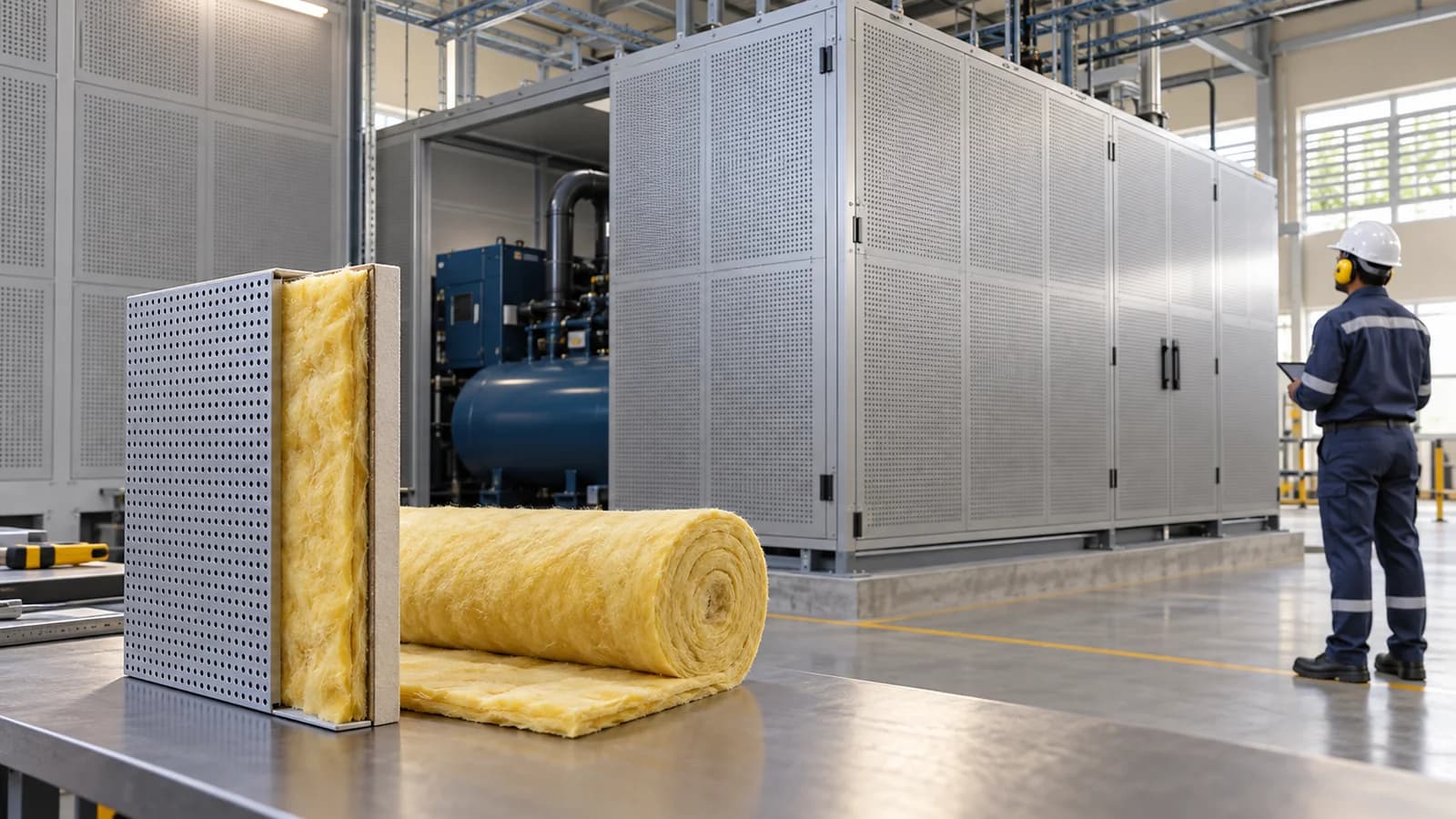
Industrial insulation starts with the equipment, environment and design objective. Thermal insulation and sound absorption solve different problems; a project may need both.
Thermal applications
Reduce unwanted heat loss or gain in an appropriately designed system. Industrial equipment, piping, HVAC services and factory roofs each call for their own product specification.
Acoustic applications
Fibrous insulation can absorb sound in designed acoustic assemblies. Equipment enclosures, partitions and building services need suitable coverings and a complete acoustic design.
Sound absorption alone does not establish the sound isolation of a wall, enclosure or room.
Two materials, different specifications
Both belong to the mineral wool family. Select the actual product for its operating temperature, form, thickness, density, facing and intended assembly.
Glass wool
Made from glass fibres bonded into insulation products, with rolls, boards and other forms selected for the application. Saint-Gobain identifies uses in HVAC, building envelopes and suitable industrial duties.
For acoustic applications, specify the complete facing and covering arrangement so the assembly can absorb sound while retaining its fibres.
Rock wool / stone wool
A mineral wool option used for industrial equipment and piping, including duties requiring higher operating temperatures than typical glass wool applications.
The equipment geometry and design conditions guide the choice of slab, mattress or pipe section. Confirm the selected product’s service limits and protective finish.
A professional installation matters
The finished system must follow the actual product and project specification.
Prepare your enquiry
Send the equipment or assembly type and whether your priority is heat transfer, sound absorption, or both. Include the designer’s specification where available.
Material enquiry
Share the application, operating conditions and required quantities. We supply insulation materials; a competent specialist should specify and install the complete system.
General application context only. Confirm the selected product’s current technical data, safe use instructions and project specification before use.